What Key Combination In Linux Generates A Backspace Character
A dead key is a special kind of a modifier key on a mechanical typewriter, or computer keyboard, that is typically used to attach a specific diacritic to a base letter.[1] The dead key does not generate a (complete) character by itself, but modifies the character generated by the key struck immediately after. Thus, a dedicated key is not needed for each possible combination of a diacritic and a letter, but rather only one dead key for each diacritic is needed, in addition to the normal base letter keys.
- What Key Combination In Linux Generates A Backspace Character List
- What Key Combination In Linux Generates A Backspace Characters
For example, if a keyboard has a dead key for the grave accent (`), the French character à can be generated by first pressing ` and then a, whereas è can be generated by first pressing ` and then e.[2]Another example is the Spanish letter Ñ, which can be generated via ~ and N, hence Ñ.
What Key Combination In Linux Generates A Backspace Character List
Usually, the diacritic itself can be generated as an isolated character by pressing the dead key followed by space; so a plain grave accent can be typed by pressing ` and then Space.
Usage[edit]
A dead key is different from a typical modifier key (such as AltGr or ⌥ Option) in that rather than being pressed and held while another key is struck, the dead key is pressed and released before striking the key to be modified. In some computer systems, there is no indication to the user that a dead key has been struck so the key appears dead, but in some text-entry systems, the diacritic is displayed, along with an indication that the system is waiting for another keystroke to complete the typing sequence.
Feb 02, 2019 Note. Not all of the following shortcut keys are universally compatible with every variant of Unix and Linux. Some of these shortcut keys are designed for use in a terminal environment, while others are for use in a desktop environment. Can any one please tell me how to set backspace key so that i can delete any character directly instead of using Ctrl+h. Second Q is like in linux for going to recent command, i use up key, wat about solaris, how can i get to last command used & if it is using any combination. Can i set it to UP key like in linux. Apr 12, 2013 A different manufacturer's mouse allowed me to set BACKSPACE as one of the custom buttons. I found this useful as it functions as a quick 'go up one directory' while browsing Windows Explorer. The Intellimouse software allows just about any key combination, but not that one.
On a typewriter, the character modifier functionality is accomplished mechanically, by striking the diacritical mark without advancing the carriage (in modern terminology, diacritical mark keys on typewriters are non-spacing). With most mechanical typewriters, the key on the keyboard caused a small bar of metal to rise; the letter desired was on the end of the bar. In addition to striking the paper through the ribbon, causing ink to be deposited on the paper, the bar would prevent the platen-paper carriage assembly from advancing. Thus, the following letter will strike the same spot on the paper. A typewriter is made in such a way that one could place an acute accent (´) on a q, for example.
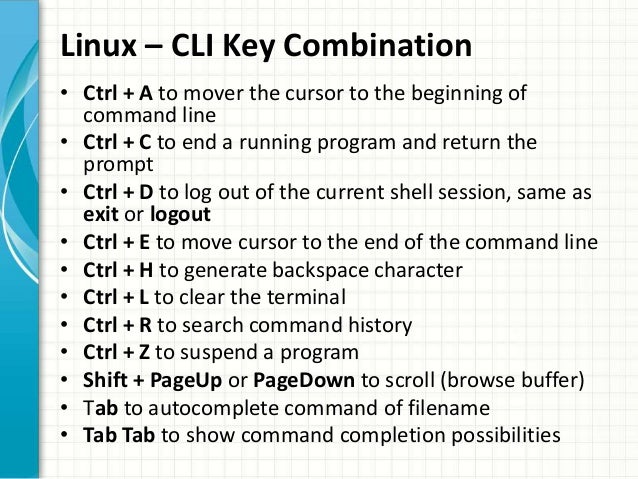
Pressing the backspace key on a computer terminal would generate the ASCII code 08, BS or Backspace, a control code which would delete the preceding character. That control code could also be accessed by pressing Control-H, as H is the eighth letter of the Latin alphabet.Terminals which did not have the backspace code mapped to the function of moving the cursor backwards and deleting the.
Many people find it quite surprising when the Backspace key doesn't backspace, the Arrow keys don't move the cursor, the Insert key doesn't insert, and so on. In general only the letter and digit keys on the main keypad can be depended upon to act as their labels suggest. The rest, well. Each has its own story. This is the story of the. Control Keys About the list. An average terminal session accepts a range of control keys. This is a list for a system running Bash, the (by far) most common scenario for a linux user. The list assumes no one has changed the default behavior. The key is the key to press, ^A meaning C-a or Ctrl+A. The Linux kernel default lets Ctrl-Backspace generate BackSpace - this is sometimes useful as emergency escape, when you find you can only generate DELs. The left Alt key is sometimes called the Meta key, and by default the combinations AltL-X are bound to the symbol MetaX.
Computers, however, work differently. The dead key temporarily changes the mapping of the keyboard for the next keystroke, which activates a special keyboard mode rather than actually generating a modifier character. Instead of the normal letter, a precomposed variant, with the appropriate diacritic, is generated. Each combination of a diacritic and a base letter must be specified in the character set and must be supported by the font in use.
There is no precomposed character to combine the acute accent with the letter q, striking ´ and then q is likely to result in ´q, with the accent and letter as separate characters. However, in some systems, the invalid typing sequence may be discarded. (By using the combining characters available in the Unicode character set, it may be possible to generate a combination that more or less looks like a q with an acute accent (q́), but that technique is quite distinct from the dead key functionality. In addition, since a letter like q does not normally take accents, font makers may not include the font attributes necessary for a combining accent to be applied successfully or in an attractive way. It is necessary to test this usage on a font by font basis, since support for accenting in this way varies considerably.)
Chained dead keys[edit]
/windows-7-key-generator-and-validation.html. Unicode encoded over one hundred precomposed characters with two diacritics, for use in Latin script for Vietnamese and a number of other languages. For convenience, they are generated on most keyboards supporting them, by pressing the two corresponding deadkeys in any order, followed by the letter key. C software license key generator. Therefore, these dead keys are chained, which means that the second keystroke does not trigger any insertion, the system being still awaiting another key press.
This chained dead key behavior is toggled by the dead key flag, which is the fourth argument of the DEADTRANS function (after the base character code, the diacritic code, and the composed character code). If this flag is set to its default value zero, the composed character is inserted; if it is set to one, the composed character code is handled as another diacritic code like those due to dead key presses, and occurs typically as a second argument in other deadlist entries.
Chaining dead keys allows for compose key emulation by simply using the dead key feature. This may be performed either with proprietary keyboard editing software,[3] or with driver development kits.[4]
Dead keys on various keyboard layouts[edit]
A key may function as a dead key by default, and many non-English keyboard layouts in particular have dead keys directly on the keyboard. The basic US keyboard does not have any dead keys, but the US-International keyboard layout, available on Windows and the X Window System, places some dead keys directly on similar-looking punctuation marks. Old computer systems, such as the MSX, often had a special key labeled dead key, which in combination with the Ctrl and Shift keys could be used to add some of the diacritics commonly needed in the Western European languages (´, `, ˆ and ¨) to vowels that were typed subsequently.
In the absence of a default dead key, even a normal printing key can temporarily be altered to function as a dead key by simultaneously holding down another modifier key (typically AltGr or Option). In Microsoft Word (and in most other text-input fields), using the Control key with a key that usually resembles the diacritic (e.g. ^ for a circumflex) acts as a dead key: [5]
- Ctrl+' → á, é, í, ó, ú
- Ctrl+` → à, è, ì, ò, ù
- Ctrl+⇧ Shift+: → ä, ë, ï, ö, ü, ÿ
- Ctrl+⇧ Shift+^ → â, ê, î, ô, û
- Ctrl+⇧ Shift+~ → ã, õ, ñ
- Ctrl+, → ç
On the Macintosh, many keyboard layouts employ dead keys. In the U.S. layout, the following selection of dead keys appears:
- ⌥ Option+e → á, é, í, ó, ú
- ⌥ Option+` → à, è, ì, ò, ù
- ⌥ Option+u → ä, ë, ï, ö, ü, ÿ
- ⌥ Option+i → â, ê, î, ô, û
- ⌥ Option+n → ã, õ, ñ
For example, when ⌥ Option+E are first pressed simultaneously and then followed by A, the result is á. On a Macintosh, pressing one of these Option-key combinations creates the accent and highlights it, then the final character appears when the key for the base character is pressed. However, some diacritically-marked Latin letters less common in the Western European languages, such as ŵ (used in Welsh) or š (used in many Eastern European languages), cannot be typed with the U.S. layout, which predates Unicode and only provides access to characters found in the legacy Mac Roman character set. Access to many more diacritics is provided by the U.S. Extended keyboard layout.
In AmigaOS, dead keys are generated by pressing Alt in combination with F (acute), G (grave), H (circumflex), J (tilde) or K (trema) (e.g., the ALT-F combination followed by the a key generates á and ALT-F followed by e generates é, whereas ALT-G followed by a generates à and ALT-G followed by e generates è).[6]
See also[edit]
What Key Combination In Linux Generates A Backspace Characters
References[edit]
- ^'Dead Key Definition of Dead Key by Merriam-Webster'. Merriam-webster.com. Retrieved 2017-05-01.
- ^The Unicode Standard, version 8.0.0, ch.05, §12 Strategies for Handling Nonspacing Marks: Keyboard Input https://www.unicode.org/versions/Unicode8.0.0/ch05.pdf#G1076
- ^'Chained dead keys'. Kbdedit.com. Retrieved 2017-05-01.
- ^'Download Windows Driver Kit Version 7.1.0 from Official Microsoft Download Center'. Microsoft.com. 2010-02-26. Retrieved 2017-05-01.
- ^'How do I get letters with accent marks in Microsoft Word?'. www.computerhope.com. Retrieved 21 February 2019.
- ^Commodore-Amiga, Inc. AMIGA ROM Kernel Reference Manual LIBRARIES. Addison-Wesley. pp. 823–827. ISBN0-201-56774-1.
External links[edit]
Retrieved from 'https://en.wikipedia.org/w/index.php?title=Dead_key&oldid=924523397'